PCSing Doesn’t Have to Kill Your Career: Inside the Global Military Spouse Connection

ADVERTISEMENT
Lately, the military and family readiness spotlight seems to be focusing more heavily on the findings of the 2024 Active Duty Spouse Survey (ADSS) that showed 20% of active duty military spouses were unemployed. Another important discovery in the 2024 ADSS found that spouses faced major problems, like finding employment and a loss or decrease in income, with each Permanent Change of Station move, with 23% of the respondents indicating they have experienced a PCS move within the last 12 months. Furthermore, the 2025 Military Family Lifestyle Survey found that 68% of respondents indicated a vital need for two incomes for their family’s well-being.
Driven by the need for impactful, long-term solutions to this ongoing problem that affects military readiness, on April 26, 2026, Air Force Civilian Service established an initiative called the Global Military Spouse Connection (GMSC), which is dedicated to connecting Department of the Air Force (DAF) Active Duty military spouses “with career support resources, hiring managers, and Air Force Civilian Service opportunities across the Department of the Air Force.” As summarized on their website, the new program supports career continuity specifically during Permanent Change of Station transitions and relocations by helping military spouses navigate federal employment, career pathways, and meaningful professional opportunities.
During the July 8th, 2026 Aim Hire Episode 46: Shared Mission webinar, Enrique Jones, the program manager for GMSC, spoke about how spouses may not have the professional network that moves with them the way an active-duty member does. He went on to say he thinks this initiative “is trying to connect them ahead of time” and once spouses arrive at their new location, “they already have that employment connection or the resources to actively investigate and try to find employment professionally.”

How Do DAF Spouses Connect?
So what does the process look like for DAF military spouses? If they meet the eligibility requirements, the GMSC only requires four easy steps, outlined on their website, to complete before matching spouses with hiring managers.
The first one is as simple as getting connected with the local GMSC team at their Military & Family Readiness Center as soon as the active-duty member receives their PCS orders. Spouses can also join online. After applying and turning in their polished two-page resume, GMSC passes on the spouse’s resume directly to the Human Resources team at the new duty station. From there, the base matches the spouse’s skills, education, and experience to managers looking to hire.
In a recent article published on the Air Force’s Personnel Center website, a U.S. Air Force Airman spouse, Kayla Amie, was quoted saying,
“I was losing hope. I thought unemployment was going to be forever, that this was my new reality.”
She went on to add that “GMSC got my resume in front of a hiring manager who could critically see my skills versus something like an algorithm on USAJobs.”

Nobody Prepared You for Military Life
But we can help. Join over 100k spouses already getting the advice, resources, and military tea they need to thrive.
What Is the Difference Between Programs?
The Department of Defense already has a successful and robust career and education program, Spouse Works. So how is the Global Military Spouse Connection program different?
To explain, Enrique Jones confirmed during the webinar that while the Global Military Spouse Connection program aims to connect Department of the Air Force Active Duty spouses more directly with DAF hiring managers, SpouseWorks
“helps military spouses build *careers, access scholarships, receive coaching, and connect them with employers who are actively hiring military spouses.”
He also said there may be plans to work in some way with them (SpouseWorks) in the future. *career was stated

Phasing In the Pilot Program for Full Launch
According to Mr. Michael Brosnan, Chief of AFCS Talent Acquisition Division, close to 300 spouses from across the globe have registered with the GMSC program since its launch on June 22, 2026, highlighting the strong demand for this type of connection and support. He also mentions that not all applicants have met the current location eligibility.
So currently, Brosnan confirms “there have been six documented placements across multiple locations,” representing “a range of career fields and pay grades.”
Brosnan goes on to clarify, “More importantly, GMSC is a career navigation network, not a guaranteed job placement service. While we connect vetted candidates directly with hiring officials, outcomes still depend on local vacancies, federal hiring conditions, and individual qualifications. We are leveraging these early lessons to refine our systems as we expand toward full enterprise capability.”
The GMSC program recently transitioned to Phase 2 on September 23, 2026, expanding the program to more bases. Being a pilot program, the GMSC will be “growing in phases to ensure long-term program integrity and sustainable support. This milestones-based approach paves the way for a full, enterprise-wide DAF implementation by 2027,” Brosnan added.
“A phased pilot exists so we can learn as we grow. Currently, our footprint is focused on select bases across the U.S., UK, Germany, Japan, and Norway, and eligibility is limited to active-duty DAF spouses holding PCS orders, meaning we cannot yet reach every AD military spouse PCSing,” Brosnan explained.
What Else Needs to Be Considered?
While military spouse career and education programs - such as the War Department’s SpouseWorks program and the Air Force Civilian Service’s Global Military Spouse Connection pilot program - are necessary to help narrow the unemployment gaps endured over the course of a service member’s career, why do these gaps still persist?
In the research report titled “Endless Adaptation, Limited Progress: An Analysis of Military Spouse Employment Across the Military Life-Course,” the findings revealed that achieving career stability requires “flexible employers, portable roles, remote work, reliable childcare, and access to mentoring or professional networks - conditions that remain the exception rather than the norm.”
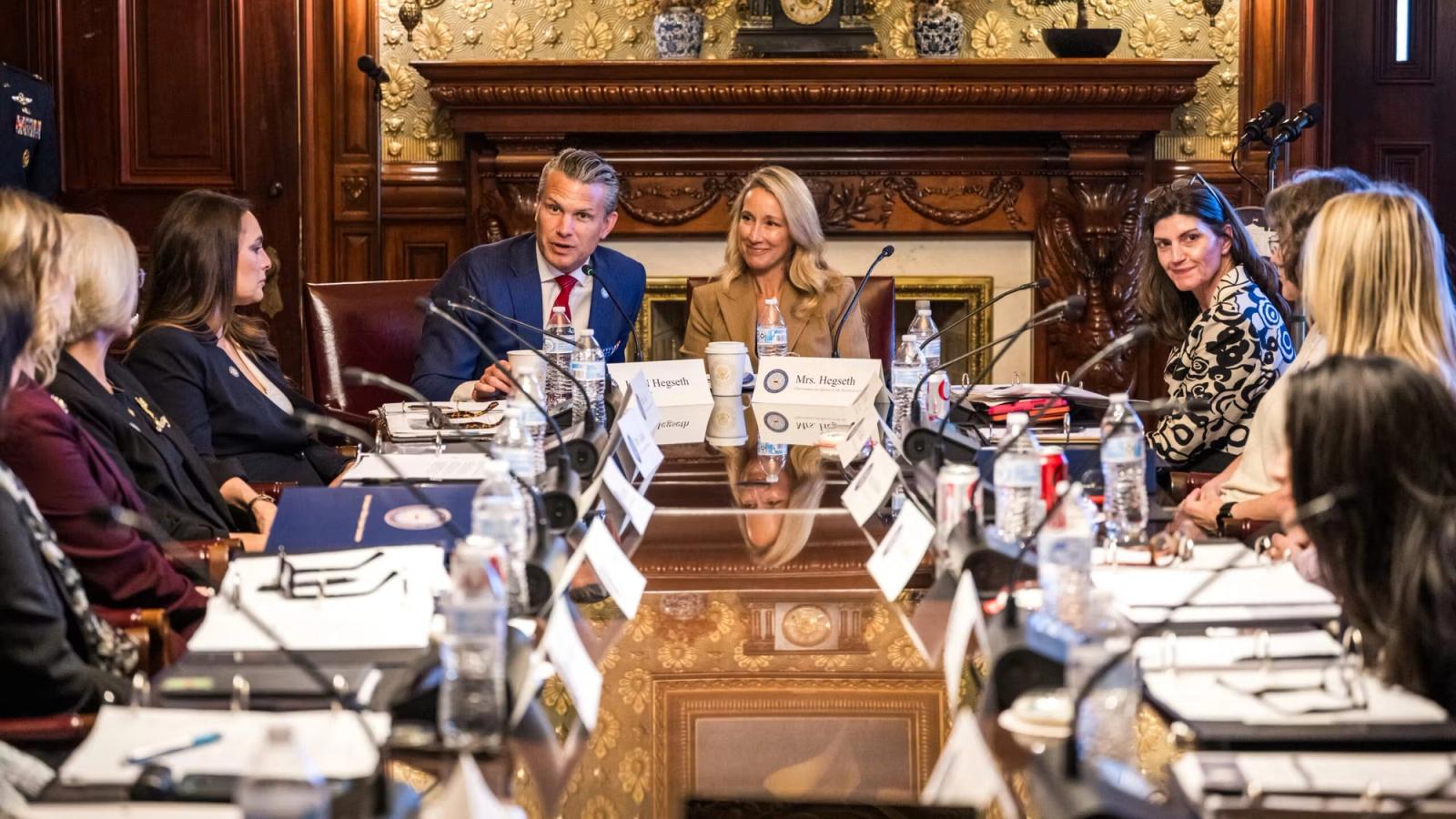
The Military Spouse Commission highlighted many of these same concerns during its inaugural meeting held on September 21, 2026. During the meeting, a played recording from an Army Reservist, who is also a mother, a full-time contractor, and business owner, acknowledged her appreciation for the Department of Defense’s effort and investment in spouse employment and education initiatives and programs, but “they all depend on one critical piece that is often overlooked: accessible, affordable, and reliable child care.”
The Army Reservist explained further, saying, “It is nearly impossible to confidently accept a job, enroll in school, or commit to professional opportunities when child care is uncertain.”
Spanning the course of three years, 2022-2025, the same Blue Star Families study found only 22% of the total sample of active-duty spouses maintained full-time employment during all 6 waves of the longitudinal study. The other 78% revealed they “worked at multiple points but rarely without disruption, underscoring that interruptions stem from systemic barriers, not lack of engagement,” the analysis indicated. Key findings concluded that a lot of the spouses “are overqualified and underpaid despite being highly educated, with education levels far exceeding those of the national average - 43% of military spouses in this sample had advanced education compared to the national average of 14%”.
Out of all the incoming messages received on the Military Spouse Commission portal, 500 were received regarding employment. With each permanent change of station, spouses stressed having to constantly rebuild their careers, resulting in families losing out on income.
“For a service member, a PCS move is often a reflection of career progression,” Cathy Bentivegna, spouse of the Chief Master Sergeant of the Space Force, said during the Commission’s first meeting.
“For a military spouse, that same move can mean starting over,” expressed Angie Perryman, spouse of the Master Chief Petty Officer of the Navy.
Perryman explained further that “unemployment does not capture the full costs,” because with every military-directed move “spouses can lose seniority, wages, retirement contributions, professional networks, licenses, and opportunities for advancement.”
With continued awareness, alongside finding employers willing to commit to hiring and retaining military spouse talent, and useful programs like GMSC and SpouseWorks, the ultimate goal is to relieve some of these PCS transition and relocation stressors and find lasting and meaningful employment for military spouses for family well-being and military readiness.
Plan your PCS
Turn your move into a plan you can actually follow
Answer a few quick questions and get a personalized timeline, a prefilled budget estimate, and a step-by-step checklist built around your family and your new base.
Continue Reading
HB 2892 Gave Military Families School Choice. Wylie ISD Gave Them a Ride
Childcare

Moving Again? How the Education Freedom Tax Credit Unlocks Better Schools for Your Kids
Childcare

Why Military Life Looks Calm Online Despite Real-World Chaos
Relationship Advice
Join the Conversation

BY CARLY TANNER
Military Spouse & Contributing Writer at MilSpouses
BY CARLY TANNER
Military Spouse & Contributing Writer at MilSpouses
Carly is a seasoned Navy spouse with nearly 25 years by her husband’s side. She holds a Bachelor of Science in Interdisciplinary Studies and a Master of Education in Teaching English to Speakers of Other Languages. Along the way, she ha...
- education
- English instructor
- DoDEA education professional
ADVERTISEMENT


ADVERTISEMENT